
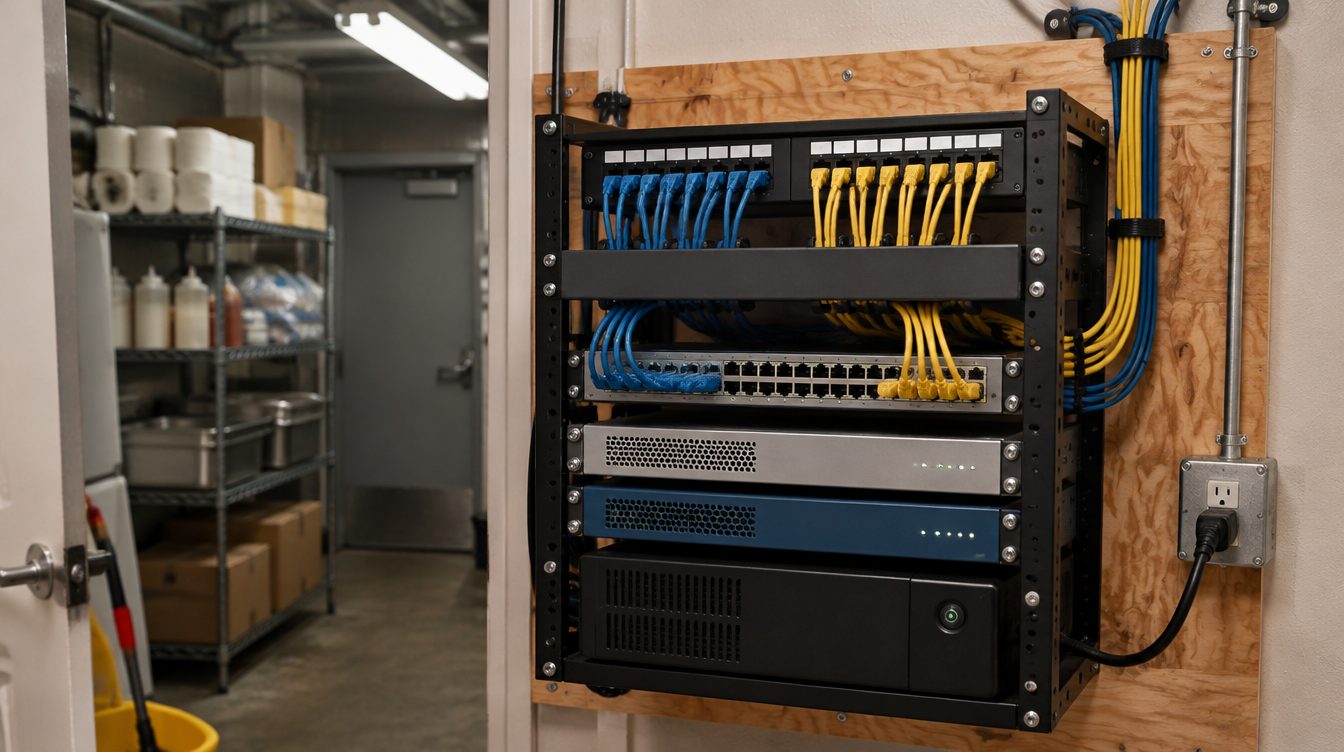
Once the doors open, the network the buildout put in still needs watching. Managed IT for a Chicago restaurant means monitoring and cybersecurity for that network after the buildout: the firewall, the switch, the access points, the camera recorder and the office PC are checked around the clock, patched on a schedule, and backed by a plan for the night something stops.
Last updated: November 2026
Inside a restaurant managed IT plan
- Monitoring: the internet line, firewall, switch, access points and recorder report in, and an outage raises an alert before the dinner rush finds it.
- Cybersecurity: firewall rules kept tight, the payment lane kept apart, factory passwords gone, and updates applied to network gear and the office PC.
- Changes: a new terminal, a moved printer or a fresh access point is added to the drawing and the port map, then cabled from the existing closet.
- Records: the logins and drawings from the buildout stay current and stay with the owner.
Keeping the payment lane separate over time
Networks drift. A manager plugs a streaming box into a spare jack at the bar, a new tablet joins the wrong WiFi, a vendor asks for remote access and gets it. Each of those can quietly put the card readers on the same network as everything else. Toast recommends physically segmenting the network from other outside traffic/network communications, and the monthly check confirms the payment lane still matches the drawing from the buildout.
Illinois expects reasonable security
Section 530/45(a) of the Illinois Personal Information Protection Act says a data collector that owns, licenses, maintains or stores records holding personal information about an Illinois resident shall implement and maintain reasonable security measures to protect them. Its subsection (c) says a collector that follows a state or federal law requiring greater protection is deemed in compliance with that section. Monitoring, patching, a separate payment lane and readable logs are the network part of that. What the statute asks of a particular restaurant is a question for its own counsel.
If computerized data holding personal information were ever breached, Section 530/10(a) says the disclosure notification shall be made in the most expedient time possible and without unreasonable delay, consistent with any measures necessary to determine the scope of the breach and restore the reasonable integrity, security, and confidentiality of the data system. Logs kept by the monitoring are what make the scope readable quickly.
When something stops on a Friday
An alert from the firewall or switch opens a ticket. The first steps happen remotely: check the internet line, restart the affected port, confirm the access point is back. If the problem is the register software or the processor, the ticket goes to the point-of-sale company with the network evidence attached, so the restaurant is not stuck between two support lines arguing about whose fault it is.
Cameras and doors after opening
The camera recorder is checked for storage health and that every camera is still recording, with audio still off. Door readers on the alley and the liquor room are checked for their logs, and any change to door hardware still follows the exit rules on the home page.
What it leaves to others
The register software, menu programming and payment processing belong to the point-of-sale company and the processor. Food safety, the liquor license and the lease belong to their own advisors. The plan covers the network and the equipment on it.