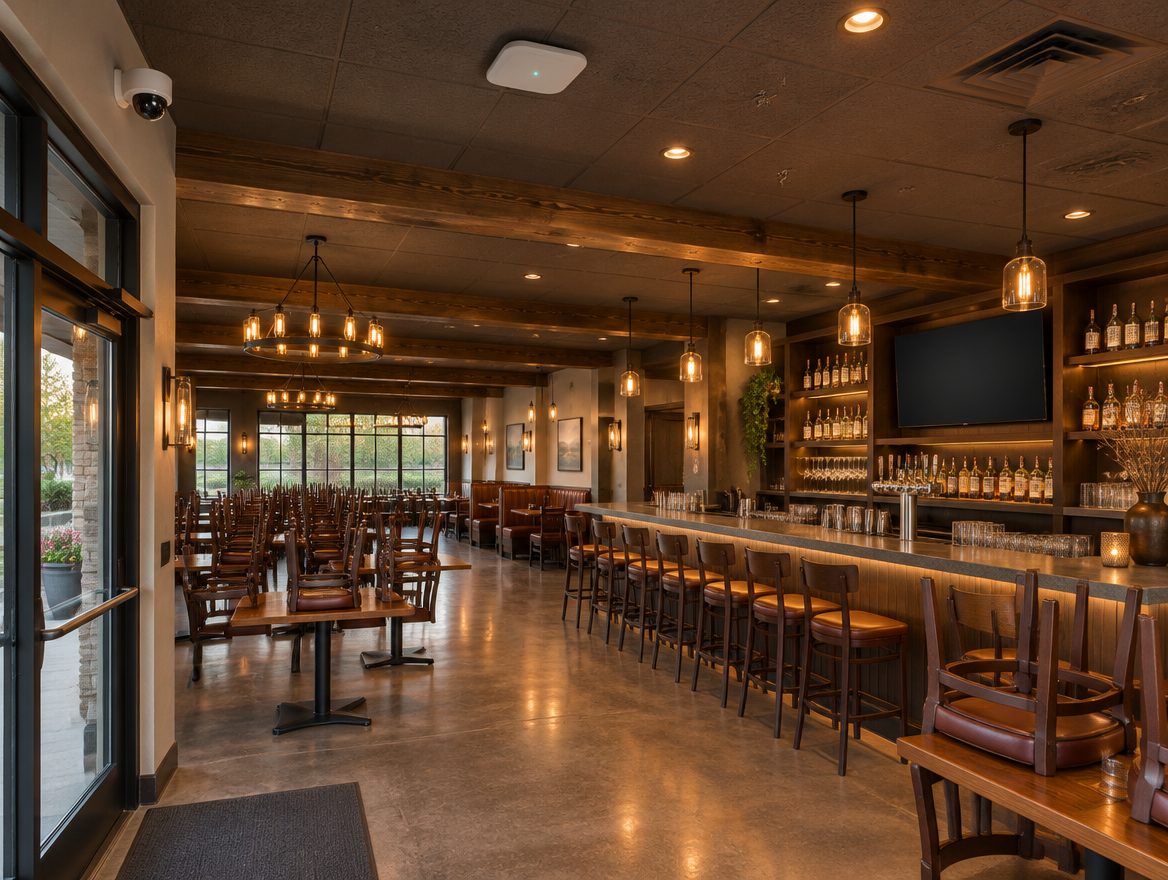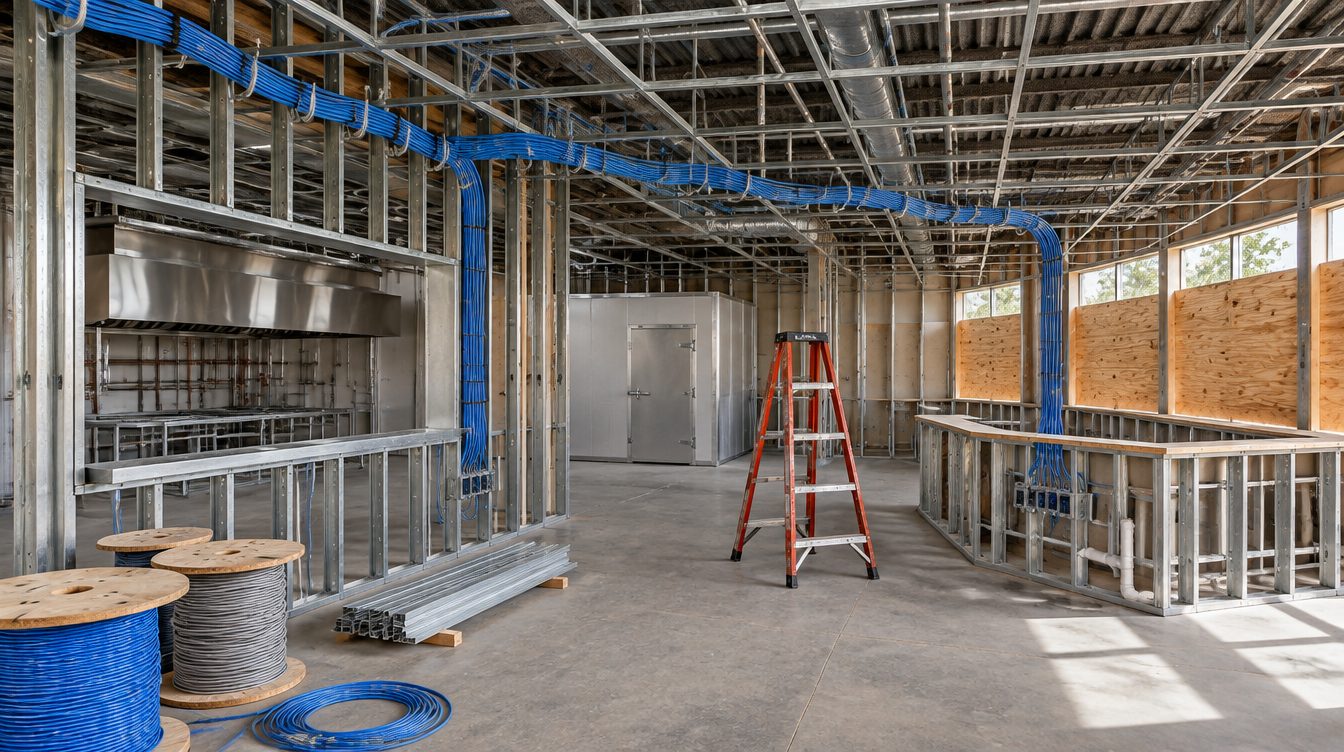
A new Chicago restaurant runs on more cable than most owners expect. Every register, receipt printer, kitchen screen, card reader, access point, camera and menu board needs a run, a jack and a port waiting in a locked closet. This buildout plans that layer against the floor plan, pull it while the walls are open, test every run, and have the network carrying traffic before the point-of-sale company shows up to load the menu.
Last updated: November 2026
- 1Mark every device on the plan. Host stand, bar wells, the pass, the back office, dry storage and the patio each get a count of jacks, screens, readers and cameras.
- 2Wire before drywall. Data, camera and reader cable goes in at rough-in on the general contractor's schedule, with the City permit the scope names.
- 3Prove it, then hand it over. Each run gets a test report and a label, the payment network is checked end to end, and the owner keeps the drawings and every login.
Why the cable has to be done before install day
A point-of-sale installer arrives to set up terminals, load items and modifiers, and train the floor staff. Pulling wire is not on that list. Toast's own site readiness guide, one register company's example, says Toast does not run networking cables. If a printer at the expo window or a reader at the bar has no live jack that morning, the install slips and the soft opening slips with it. That is why the cabling, the switch and the closet are booked as their own job, finished first.
Everything inside one Chicago buildout
- Low voltage wiring: a home run to each terminal, printer, kitchen display and ceiling access point, from the host stand to the walk-in corridor.
- A separate lane for payments: Toast recommends physically segmenting the network from other outside traffic/network communications, so guest WiFi, the office PC and staff phones never share the lane the card readers use.
- Security cameras: the entrance, each register, the bar, dry storage and the delivery door, recorded in the closet.
- Door readers: the alley door, the office and the liquor room, planned against the exit rules below.
- Screens: menu boards at the counter and ticket displays on the line.
Exit doors, readers and the Chicago Building Code
Chicago writes its own building code, Title 14B, built on the 2018 International Building Code with local changes. For a dining room the panic hardware rule comes through unchanged. Section 1010.1.10 says swinging doors serving rooms or spaces with an occupant load of 50 or more in a Group A occupancy shall not be provided with a latch or lock other than panic hardware or fire exit hardware. It lists exceptions: a main exit locked under Section 1010.1.9.4, item 2, and doors with panic hardware that are electrically locked under Section 1010.1.9.9 or 1010.1.9.10. The occupant load posted for the room is what decides which doors that reaches.
The front door is where Chicago differs from the model code. The City's revision of Section 1010.1.9.4 lists the following conditions under which locks and latches may stop a door from opening. One of them: where approved by the fire code official, the main door of a Group A building with an occupant load of 300 or less may carry a key-operated lock from the egress side, provided that the lock is readily distinguishable as locked, a sign reading THIS DOOR TO REMAIN UNLOCKED WHEN THIS SPACE IS OCCUPIED is posted, and the use of that lock is revocable by the fire code official for due cause. So a key-locked front door is a question for the fire code official, asked early, never something the plan assumes.
A reader that drives an electric lock adds its own condition. Section 1010.1.9.10 permits door hardware release of an electric lock only where every item on its list is met, and one of those items is that loss of power to the electric locking system automatically unlocks the door. Each reader door goes on a door schedule with the load it serves, its hardware, how it releases, and where its lock power comes from. The battery backup in the closet keeps registers and cameras running; it is never wired to hold a lock shut.
Screens at the counter and on the line
A menu board needs a data jack and an outlet behind the bracket before the wall is finished, or the cord ends up taped down the tile. Ticket screens on the line get a wired drop rather than WiFi, so orders keep landing during a full Friday push. Delivery tablets get a jack and a shelf near the pass, away from the fryer.
One locked closet for the whole network
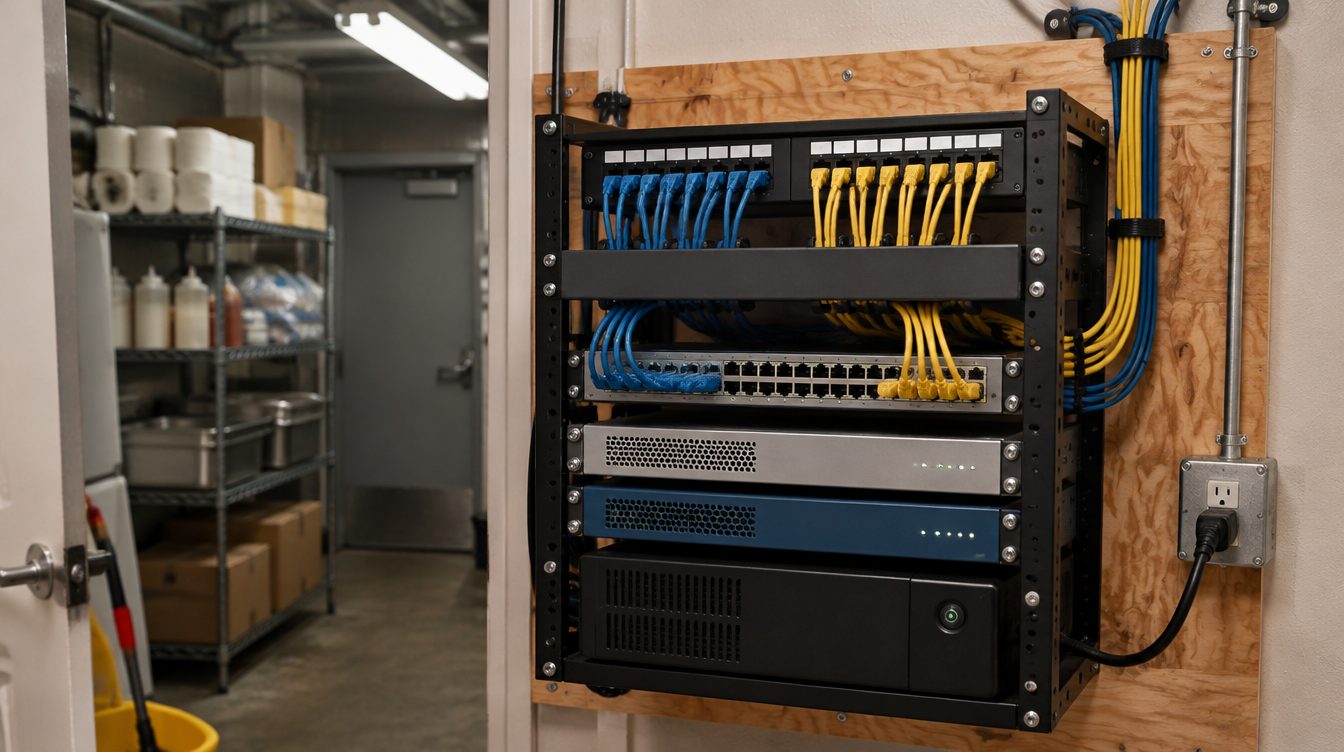
All of the cable ends in one locked closet or wall cabinet: patch panel, switch, firewall, camera recorder and a small battery backup, labeled port by port. It sits away from the dish machine, the steam from the line and the walk-in condenser, with its own circuit. The restaurant owns every account from the first day: internet, firewall, WiFi, camera app.
After opening, the drawings and port map stay with the owner. A managed IT plan adds monitoring and cybersecurity for restaurants that want someone watching the network.
Card data and Illinois privacy law
Taking cards at the table brings a state statute into the build. 815 ILCS 530/5 counts a person's first name or first initial and last name together with a credit or debit card number as personal information, when the name or the card data is not encrypted or redacted, or when the keys to read them were taken in the breach. Section 530/45(a) says a data collector that owns, licenses, maintains or stores records holding that information about an Illinois resident shall implement and maintain reasonable security measures to protect them. Its subsection (c) says a collector that follows a state or federal law requiring greater protection is deemed in compliance with that section.
A payment lane kept apart from guest WiFi, a locked closet and readable switch, door and camera logs are the physical part of that work. They do not make a restaurant meet a statute; that question belongs to the owner's own counsel.
What Chicago operators ask before the first drop
When should the cabling plan start?
As soon as the kitchen layout and the seat count stop moving. Moving a jack on a drawing costs nothing; moving it after the drywall is taped means a patch.
What does the quote need?
A floor plan, a device list, the opening date and the doors that need readers. If the job grows past those details, the change is brought up and the bid updated before the extra work starts.
Can WiFi be added later?
The access points can be, but the cable to the ceiling is far easier while the grid is open. Plan the drops now and hang the radios when the floor is set.